- WeekendInvesting
- Posts
- The Truth About the 35-Year Market War!
The Truth About the 35-Year Market War!
Is India Outperforming the US?

WeekendInvesting Analytics
May 05, 2026

SPECIAL OFFER
Hi Investor,
2 years of ~0% returns on Nifty Junior. Historically, what followed has been extraordinary — every single time.
We built Mi NNF 10 to try and capture that upside and also be prepared for all kinds of market scenarios .
This strategy has been trusted and loved by several thousands of investors all across the globe.
Get 30% off with code NNF30 — first 50 users only.
Request Performance data → https://forms.gle/fry26MDfwrVrfNez7
Market Update - Tuesday, 05 May
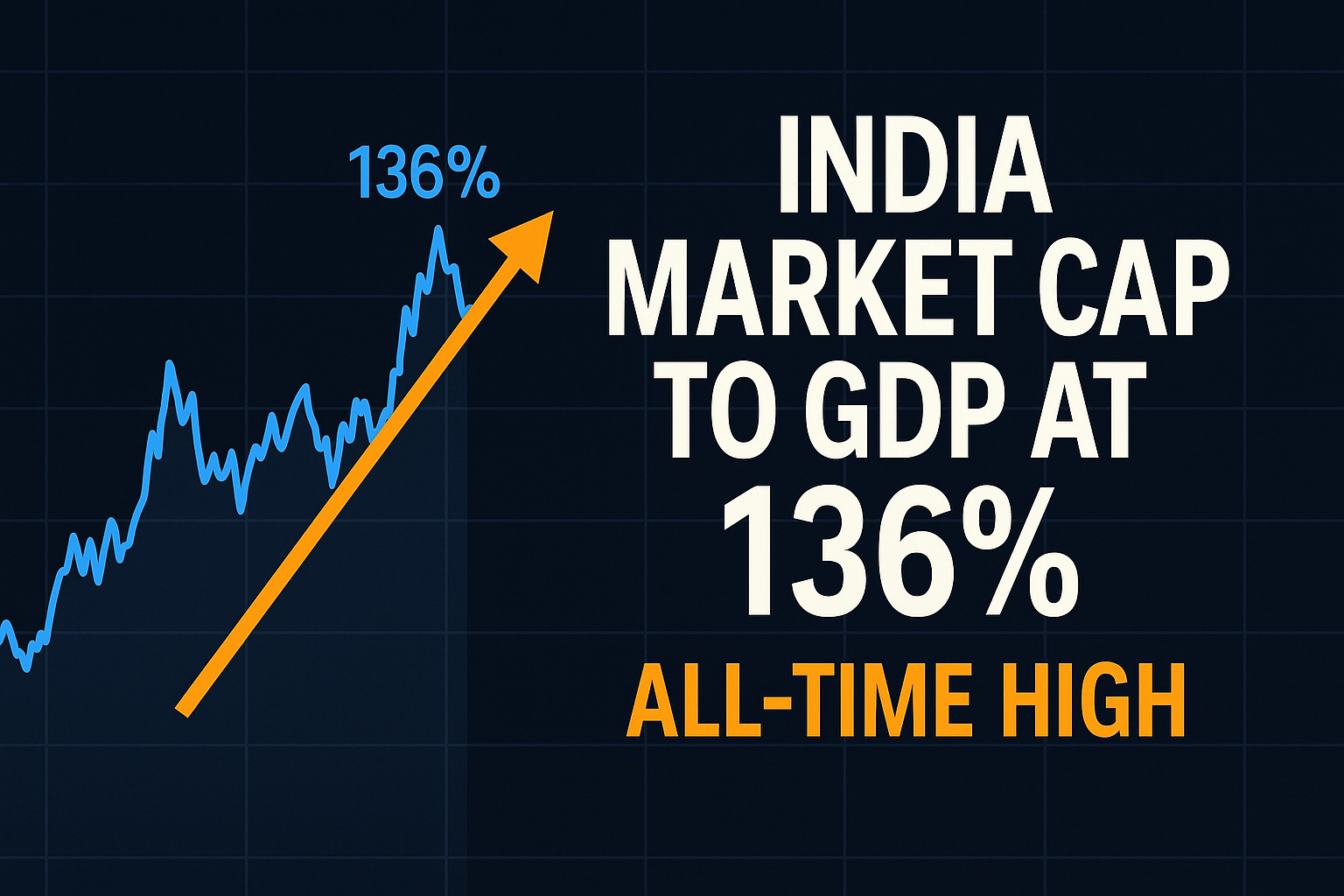
Lately, there has been a lot of talk about investing overseas, with suggestions that Indian markets are not as good as it gets and that perhaps allocations should change. To address this, a look at the last 30 to 35 years of trend watching reveals where the trends of the Indian markets and the U.S. S&P 500 have been. Surprisingly, since data became available around 1990, the Nifty in dollar terms—represented by the white line in the data—has not done poorly at all versus the S&P 500…..
Looking at the charts, tensions rose again after yesterday's missile attack on Dubai and ships getting fired at in the Strait of Hormuz. Brent oil went from 109 to 115, causing global markets to take a step back. Indian markets also opened lower, hitting a low of 23,882 today, but closed above 24,000 again. Over the last seven sessions, the market has not really gone anywhere, stabilizing after the initial fall and bounce.
We are currently waiting for a trigger to move up or down; although down triggers are plenty right now, the market is not abiding by them. The undercurrent remains slightly biased toward the positive side rather than the negative side. As a result, the market fell a couple of hundred points from that top and closed at 0.51%.
Nifty Junior was up 0.49%, looking good near its recent highs, while Mid caps were flat at 0.11% and Small caps were flattish at 0.19%.
No real big moves are happening in the broader market, and Bank Nifty was down 0.6%.
Bank Nifty is currently at a gap created earlier in April, and if it starts to bleed, a quick fall to fill that gap could happen.
Gold had a tick up of 0.98% at a price of 14,792 per gram in Indian rupees, but it is not moving significantly.
Crude oil is around $113 right now, reaching a recent high last seen in February and March 2022 when Russia attacked Ukraine. We are at the cusp of a breakout situation where a major escalation could see oil hitting 120 or 125 very rapidly, creating an edge-of-the-seat scenario.

Other Market Triggers
The Nifty heat map showed good support from Mahindra and Mahindra following better than expected results.
Other gainers included the Bajaj Twins, Hindustan Unilever, Nestle, Hindalco, Ultra Semco, and Infosys. Some losses were noted in L&T, Bharti Airtel, Maruti, Coal India, SBI, ICICI Bank, and Eicher, while the rest remained largely flat.
In the Nifty Next 50, Adani Green took the lead as Adani stocks continue to run, and Vedanta was up 3%.
Other gainers included CG Power, Godrej CP, Solar Industries, LTIM, PFC, and HDFC AMC, while Ambuja Cement, DLF, and Muthoot Finance lost ground. In the mover of the day segment, CAMS jumped 9% after reporting better than expected Q4 revenues and a dividend, with the stock moving from 600 to 800 recently.
Wockhardt also jumped 8%, surging over 12% to a nine-month high as it transitioned from a loss-making to a profitable company.
U.S. Market Updates
In the US, the previous session saw stocks like UPS drop 10.4%, FedEx 9%, AMD 5%, Qualcomm 4.8%, and Lowe's 4%. These could be part of the Weekend Investing US stock strategy, though these are not recommendations.
Yesterday, the Dow dropped more than 1% for the first time in days, while the S&P 500 fell 0.4%.
Over the last 12 months, the US market has had a fantastic run, with the Nasdaq up 39.7%, S&P up 28.4%, and Dow up 19.8%.
What to watch next ?
The real estate index peaked in 2008 and remains 50% lower than that peak 18 years later. This highlights that getting out of stocks, sectors, or indices at some point is a must in a strategy, as you cannot keep waiting forever.

Conversely, the metal sector stayed in a range for a decade before breaking out post-2021 and increasing three to four times in value. Often, people get frustrated when a sector doesn't move and exit just before it pulls away. Sitting in stagnant sectors can dampen your confidence in selecting winners. This correlates to a following video explaining why SIPs are not always enough and what to do instead.

Get your Portfolio Momentum Report today and ensure your investments are positioned for success!

Forwarded this email? Subscribe Now
Top Trending Strategies
Mi EverGreenPower of Gold with Equity | Allocate 20 strongest CNX200 stocks with Gold ETF | Monthly Rebalanced Mi Evergreen is a dynamic strategy which aims to outperform the underlying benchmark CNX200. This index comprises 200 large and mid-cap names which are the top-quality stocks in the markets. This product is suitable for use in all stages of the market cycles as it is designed to invest in the strongest stocks in the pack at any point. Additionally, there is a permanent hedge of Gold available here.
| Mi AllCap GOLDA core strategy to allocate 25% each to Large Cap , Mid Caps, Small Caps & Gold Mi AllCap GOLD is a robust, rule-based core rotational strategy from the House of WeekendInvesting, curated to cover stocks in the CNX500 universe, designed to offer a balanced asset allocation and diversified wealth creation approach for compounding returns over long periods of time.
|
The Premium Trap: Why Your Global ETF Might Be Overpriced
Investing in international markets through ETFs (Exchange Traded Funds) feels like a shortcut to owning the world's best tech giants. However, a recent deep dive into data published by Finprint reveals a hidden danger that could eat your returns before the market even opens: The NAV-Price Gap.
Understanding the "Sticker Price" vs. Actual Value
When you buy an ETF, you are essentially buying a basket of stocks. The Net Asset Value (NAV) represents the actual value of those underlying stocks. The Market Price is what you pay on the exchange. In a perfect world, these two should be identical.

Source : Fynprint
As the data shows, some popular ETFs like MON100 (Motilal Oswal Nasdaq 100) are currently trading at fair levels, with a gap of only about 1%. This is acceptable. However, the story changes drastically when we look at less liquid or specialized overseas funds.
The Danger of 'Blind' Premiums
Imagine walking into a store to buy a gold coin worth ₹100, but the shopkeeper charges you ₹115 just because there’s a long line. That is exactly what happens with ETFs like the Nippon India Hang Seng BEES.
Market Price: ₹502
Actual NAV: ₹438
The Result: You are paying a massive premium for the same asset.
If the market sentiment cools down and the premium drops to zero, you lose nearly 15% of your investment value—even if the underlying stock market doesn't move an inch.
The Worst Offenders: 20% Extra for Nothing?
The inefficiency in the Indian market for overseas ETFs can be shocking. Take the Mirae Asset NYSE FANG+ ETF as a cautionary tale:
Market Price: ₹161
NAV: ₹133
Premium: ~21%
Paying a 21% premium is essentially starting your investment journey with a 21% loss. At this point, it is often more cost-effective to open a direct US brokerage account where these assets trade at their true value.
How to Protect Your Portfolio
Market inefficiency thrives on investor ignorance. Before you click "buy" on any overseas ETF, follow these steps:
Check the AMC Website: Asset Management Companies publish the "Real-time" or "End of day" NAV.
Compare with Live Price: If the gap is more than 1-2%, be extremely cautious.
Look for Liquidity: Low-volume ETFs are more prone to these price distortions.
Meme Of The Day

Scenario: You’ve been tracking a Tech ETF that holds your favorite global companies. You check the terminal and see the following: Actual Value (NAV): ₹100, Current Market Price: ₹115. What is your move? |
|

Share this daily insightful newsletter with your market savvy friends and family or sign them up for the newsletter !
For detailed blogs, reports and strategies, check WeekendInvesting.com
Reply