- WeekendInvesting
- Posts
- What led to Market Crash Today ?
What led to Market Crash Today ?
Pain is Part of the Plan

WeekendInvesting Analytics
February 19, 2026

Market Update - Thursday, 19 Feb
Today witnessed a sell-off out of nowhere, an event that nobody was expecting. The market was completely down from the morning until the very end of the session. There appears to be a few potential drivers for this movement; it seems there were either some large Foreign Institutional Investor (FII) sales today, or news about oil prices going up is unnerving investors.
The Nifty index was completely smashed down. The gains achieved over the previous three days have been entirely wiped out, with the Nifty closing 1.4% lower. This shift significantly alters the short and mid-term trajectory once again.
The downward pressure was felt across all segments today. The Nifty Junior was smashed down 1.8%, mid-caps fell 1.5%, and small caps dropped 1.19%.
Even the Bank Nifty succumbed, falling 1.32%, although its underlying trends remain positive. This move felt like a bolt out of the blue for equities.
Meanwhile, gold is inching up, reaching a price of 15,518 rupees per gram, and silver also moved up 2.47% during this session.

Other Market Triggers
Besides ONGC, which rose alongside oil prices, almost nothing was spared. IT stocks fell less than others, which faced a much ruder shock of selling.
The Nifty Next 50 heat map was also completely red, leaving no place to hide.
In the "Mover of the Day" segment, Newgen Software rose 20% amidst Middle East orders and AI-driven market momentum, making full use of the current AI buzz.
Conversely, sectoral trends were all down, ranging from a half percent to two and a half percent.
U.S. Market Updates
In contrast to the domestic market, the previous U.S. session saw an upswing. The NASDAQ, Russell, S&P 500, and Dow Jones all rose between 0.2% and 0.8%. Stocks like General Motors, Morgan Stanley, Intuit, Exxon, and Booking Holdings gained between 3% and 3.5%. While some of these could be part of the Weekend Investing U.S. stock strategy, these are not recommendations.
The U.S. heat map looked positive with ASML, MU, Microsoft, Meta, and Amazon in the green alongside Nvidia, while Walmart, Costco, AMD, and Intel remained in the red.
What to watch next ?
Oil has moved from 67 to 71 on fears of a U.S.-Iran attack. The scale of the market move was surprising to everyone.
After starting to look slightly better and attempting to consolidate near the 26,000 level, the market has been sold off again.
Consequently, there will be a longer wait to see the markets truly trend upward.

Get your Portfolio Momentum Report today and ensure your investments are positioned for success!

For more details about Category 3 AIFs, fill in the interest form below
Important Announcement
We are now live on our official WhatsApp Channel. We share all our strategy updates, rebalances, and important announcements here. Please watch this video to know more & join in at the earliest possible.
Top Trending Strategies
Mi EverGreenPower of Gold with Equity | Allocate 20 strongest CNX200 stocks with Gold ETF | Monthly Rebalanced Mi Evergreen is a dynamic strategy which aims to outperform the underlying benchmark CNX200. This index comprises 200 large and mid-cap names which are the top-quality stocks in the markets. This product is suitable for use in all stages of the market cycles as it is designed to invest in the strongest stocks in the pack at any point. Additionally, there is a permanent hedge of Gold available here.
| Mi AllCap GOLDA core strategy to allocate 25% each to Large Cap , Mid Caps, Small Caps & Gold Mi AllCap GOLD is a robust, rule-based core rotational strategy from the House of WeekendInvesting, curated to cover stocks in the CNX500 universe, designed to offer a balanced asset allocation and diversified wealth creation approach for compounding returns over long periods of time.
|

The Price of Admission: Why Market Pain is Pre-Paid for Gain
If you want the returns of the S&P 500, you have to be willing to ride the roller coaster. Recent data presented by Charlie Bilello, spanning nearly a century of market history, proves a fundamental truth: Volatility is a package deal. You cannot opt-out of the "Down Days" if you want to be present for the "Up Days."
The Law of Symmetric Volatility
The data shows a striking correlation: sharp falls are almost always mirrored by sharp rallies. Over the last 100 years, the years with the most gut-wrenching drops were often the ones with the most explosive recoveries.

The 1930s (Great Depression era): A chaotic period where we saw years with 97 days of >1% drops, but also 69 to 86 days of >1% gains.
2008 (Financial Crisis): 75 days down, 59 days up.
2020 (COVID-19): 45 days down, followed by 64 days of massive recovery.
Pain is Part of the Plan
The takeaway is simple: Gain and Pain are roommates. You cannot invite one and kick the other out. In 2022, for instance, we saw 63 days of significant drops, but 59 days of significant rises. If you panicked during those 63 days, you weren't there to capture the 59 days of recovery.
As long as your strategy is sound and your "financial house" can withstand the temporary heat, these fluctuations shouldn't scare you. They are simply the "transaction fees" of the stock market.
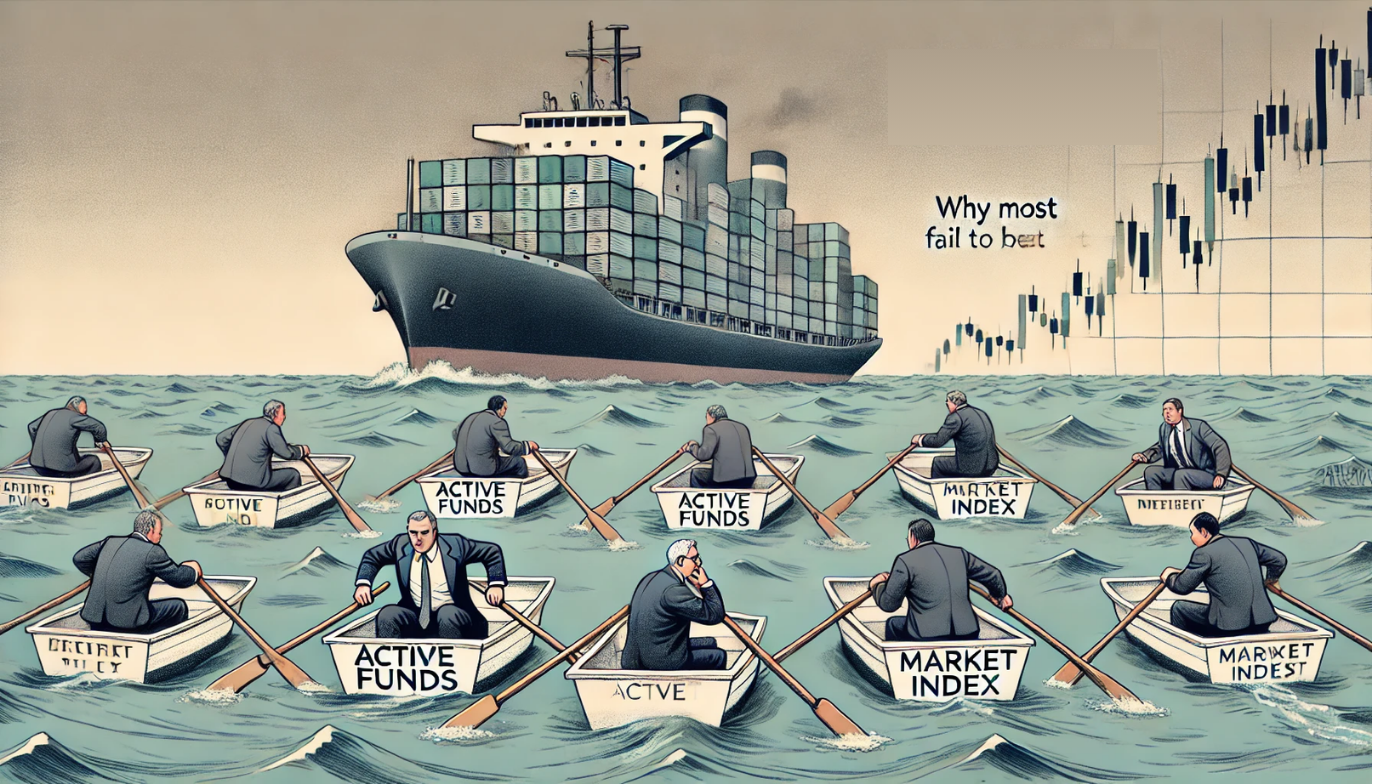
Meme Of The Day

How do you react when the Nifty drops 1% or more in a single day? |

Share this daily insightful newsletter with your market savvy friends and family or sign them up for the newsletter !
For detailed blogs, reports and strategies, check WeekendInvesting.com
Reply